
This guide is independent travel information. The list of places in Sofia City Pass will be published before launch, and nothing below says what the pass includes.
The top Sofia attractions in the centre
All eight sights below are in the centre, and day one of the itinerary links most of them.
1. Alexander Nevsky Cathedral and its crypt
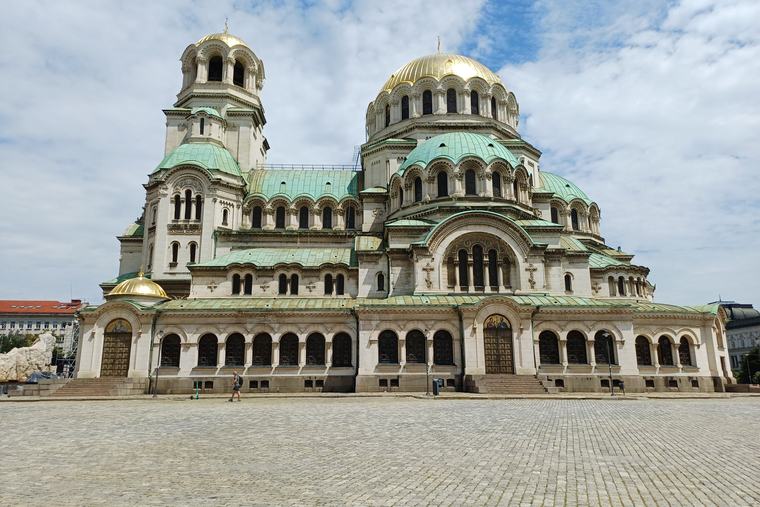
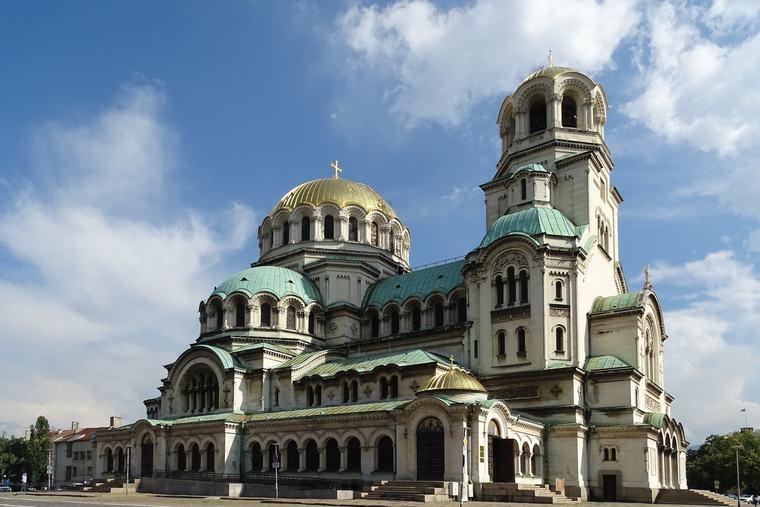
Alexander Nevsky Cathedral was built as a memorial to the Liberation, the Russo-Turkish War of 1877–78. Architect Alexander Pomerantsev designed it; builders worked on it from 1904 to 1912, and it was consecrated in 1924. It stands on raised ground at 552 m, which the National Gallery calls the highest point in Sofia, with murals by painters including Vasnetsov and Mrkvička. The crypt was built for tombs, but no one was ever buried there. Today it holds the Museum of Christian Art, a branch of the National Gallery: adult €10, €2 on Thursdays, free under 18. Closed Mondays.
2. St Sofia Basilica and the archaeological level
The present St Sofia church is the fourth on its site, built at the end of the 5th or start of the 6th century. Below it lie three earlier churches and about 50 tombs from Serdica's eastern necropolis, including the 5th-century tomb of Honorius. The city's name, Sofia, first appears in a Dubrovnik document of 1376. The archaeological level costs €4 for adults and is free on the second Thursday of each month. From November to April it's closed on Mondays.
3. Ancient Serdica: the free part and the paid part
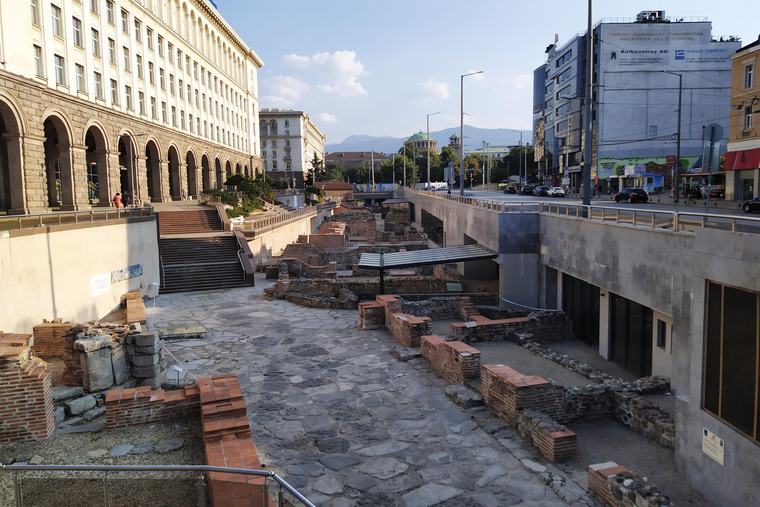
The Ancient Serdica complex, by Serdika metro station, has two parts. The Largo zone, under Nezavisimost Square, is open-air and free, daily from 07:00 to 22:00. It shows the decumanus maximus (the Roman main street), a block of houses and shops, and a hall of stone monuments. The underground exhibition at 2 Maria Luiza Boulevard covers 6,000 m²: six streets, baths, early Christian basilicas, the Felix mosaic and the bishop's basilica where, the museum believes, the Council of Serdica met in 343. It costs €3, Tuesday to Sunday, last entry 17:30. The museum's English web page still shows an old lev price; the euro price list is the current one.
4. Rotunda of St George
In the Presidency courtyard at 2 Dondukov Boulevard, the Rotunda belongs to an early 4th-century complex from the time of Constantine the Great. Inside are frescoes from the 9th–10th, 12th and 15th centuries; from the early 16th century it served as a mosque. The municipality calls it the oldest acting church in the city. The Roman street, underfloor heating and basilica remains around it are free and open 24 hours.
5. Banya Bashi, the Synagogue and the Central Mineral Baths
Banya Bashi Mosque dates from 1566–1567 and is attributed to Mimar Sinan. The Sofia Synagogue opened in 1909; it calls itself one of the three largest Sephardic synagogues in Europe and the largest in the Balkans. Its brass chandelier weighs about 1,700 kg. Tickets cost €10, with an audio guide. It opens Sunday to Thursday 09:00–17:00 and Friday 09:00–15:00, and closes on Saturdays and on Bulgarian and Jewish holidays. The Central Mineral Baths opened in 1913 and now house the Regional History Museum – Sofia: adult €5, free on the first Thursday of each month.
6. National Archaeological Museum
Building began in 1451 and finished in 1494, as the Büyük ("Grand") Mosque. The museum calls it the oldest preserved building in Sofia, and the building passed to the National Museum in 1892–93. Head for the Vault, the treasury hall, which shows treasures including those found at Lukovit and Nikolaevo. Tickets: adult €6, free on the last Sunday of the month. From November to April it opens 10:00–17:00 and closes on Mondays, and it shuts on 25 December and 1 January.
7. National Gallery: the Palace and Kvadrat 500
The former royal palace opened in 1882 in a rebuilt Ottoman governor's residence. The National Gallery now uses it for temporary exhibitions (adult €8), and the National Ethnographic Museum fills its north-east wing. Kvadrat 500 shows about 1,700 works in 28 halls on four levels: adult €10, or €15 together with the Palace. A combined ticket for three of its sites, the crypt, the Palace and Kvadrat 500, costs €25; the crypt plus Kvadrat 500 is €18. All National Gallery sites cost €2 on Thursdays, are free under 18 and close on Mondays.
8. Vitosha Boulevard and the yellow paving stones
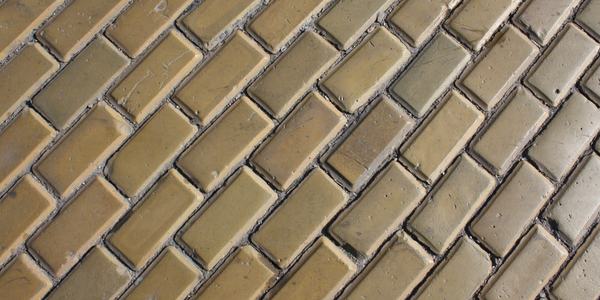
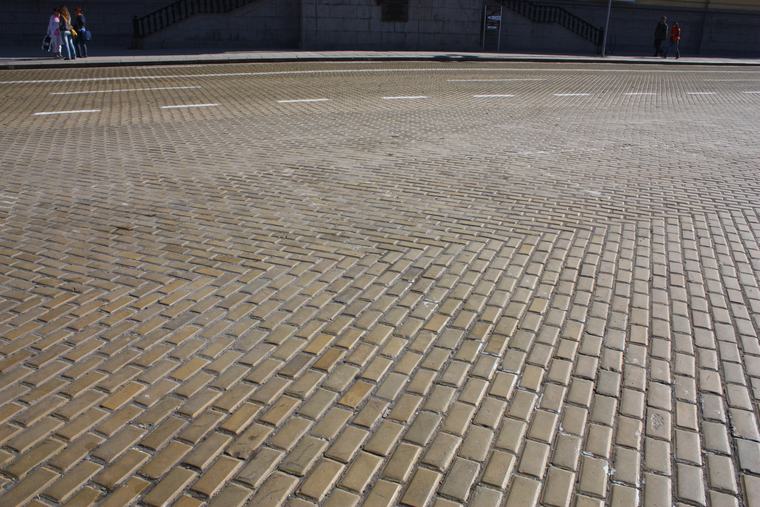
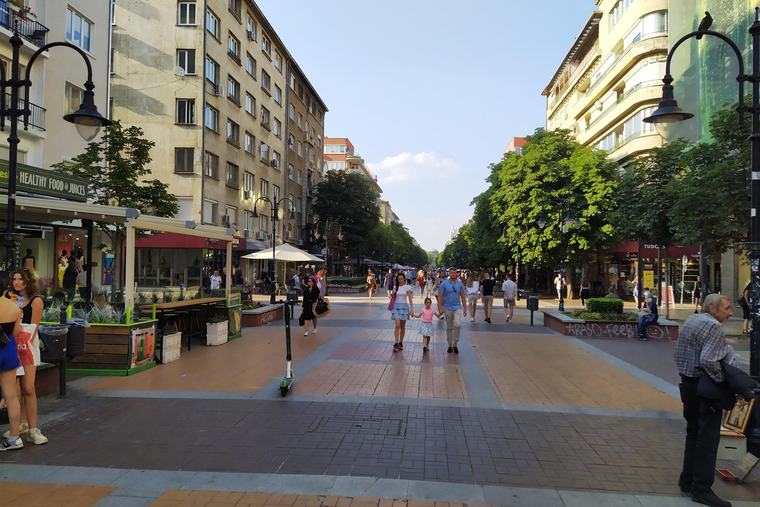
Vitosha Boulevard's car-free stretch runs for about a kilometre. The yellow paving is a separate story. These are ceramic blocks from a brickworks near Budapest, laid between 1907 and 1909. They cover Tsar Osvoboditel Boulevard, the square in front of the National Assembly and the old streets around them, not Vitosha Boulevard itself. About 28,400 m² went down in 1907 and 30,902 m² in 1908. You'll hear they were a wedding gift to Prince Ferdinand, or a present from Vienna. Sofia Municipality's history of the paving rejects the wedding story and says no document names any donor: the city ordered and paid for the blocks itself.
Tip
Thursday is the cheapest day for art. Every National Gallery site, including the Nevsky crypt, Kvadrat 500 and the Museum of Socialist Art, costs €2. Other museums have their own free days, listed in the table below.
Beyond the centre: Boyana Church, museums and Vitosha
Boyana Church (UNESCO)
Boyana Church, at 3 Boyansko Ezero Street, has been on the UNESCO World Heritage list since 1979. An inscription by its donors dates the full painting of the church to 1259. It's small, and it shows: no more than nine people inside at once, for ten minutes each. Adult €10, open daily (09:00–17:30 from November to March). Entry is free on the last Monday of each month after 15:00. The church has been a branch of the National History Museum since 2003.
National History Museum
Bulgaria's National History Museum occupies a former government residence in Boyana. Unlike most Sofia museums, it opens every day of the week, Mondays included: in winter, 09:30–18:00. Adult €9. It's closed on 1 January, Easter Sunday and 24–25 December. Pair it with Boyana Church and you have a full, easy morning.
Museum of Socialist Art
The Museum of Art from the Socialist Period opened in 2011. The best of it is outside: a 7,500 m² sculpture park with more than 70 monumental works, plus the five-pointed star from the former Party House. A hall and video room complete it. Adult €8, €2 on Thursdays. Closed Mondays.
Vitosha mountain
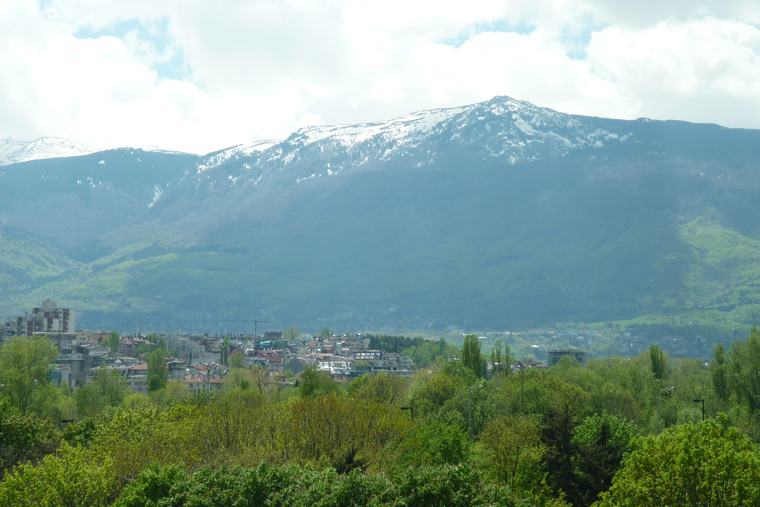
Vitosha Nature Park, declared in 1933–34, calls itself the oldest nature park in the Balkans. Its top, Cherni Vrah, reaches 2,290 m. Bus 66 runs from the Zoo to Aleko, and bus 63 from Tsar Boris III Boulevard to Zlatni Mostove. From November to March the last bus 63 down leaves at 17:45. The park's transport page has the details. The Simeonovo gondola has been closed since about late 2023, with no date for reopening, and the Dragalevtsi chairlift is marked as not working. Ignore guides that still send you up by cable car.
More Sofia museums worth the trip
- National Museum of Natural History: founded in 1889, nearly 1.5 million specimens. Adult €6.50, open daily.
- Earth and Man National Museum: a national museum of minerals, founded in 1986 in a late 19th-century building of the old Arsenal complex. Adult €5, open daily, free on the last Monday of the month.
- The Red Flat: four rooms recreating a Bulgarian family home of the 1980s, with an audio guide of about 90 minutes. €9.20, open daily 10:30–18:00.
- Sofia Arsenal – Museum of Contemporary Art: in a 1916 building first used to make and store artillery ammunition. Adult €4, closed Mondays.
Sofia museums: prices and closing days
Most Sofia museums close on Mondays, and in winter several shorten their hours. The table shows adult tickets. The museums set these prices and change them, so check the linked page before you go.
| Museum | What it is | Adult ticket | Closed |
|---|---|---|---|
| Museum of Christian Art (Nevsky crypt) | Museum in the cathedral crypt | €10 (€2 Thu) | Mon |
| St Sofia archaeological level | Earlier churches and tombs under the basilica | €4 | Mon (Nov–Apr) |
| Ancient Serdica, underground exhibition | Roman streets, baths, basilicas | €3 | Mon |
| Regional History Museum – Sofia | City history in the Central Mineral Baths | €5 | Mon (Nov–Apr) |
| National Archaeological Museum | National collection in a 15th-century mosque | €6 | Mon (Nov–Apr) |
| Kvadrat 500 | National Gallery, about 1,700 works | €10 (€2 Thu) | Mon |
| National Ethnographic Museum | In the former royal palace's north-east wing | €5 | Mon |
| Sofia City Art Gallery | The city's art gallery, 1 Gen. Gurko St | €4 | Mon |
| Museum of Socialist Art | Sculpture park and hall | €8 (€2 Thu) | Mon |
| Military History Museum | Indoor and outdoor military collection | €5.11 | Mon and Tue |
| National History Museum | Bulgaria's history, in Boyana | €9 | Open daily |
| Boyana Church | UNESCO-listed church, murals of 1259 | €10 | Open daily |
| National Museum of Natural History | Nearly 1.5 million specimens | €6.50 | Open daily |
| Earth and Man National Museum | National museum of minerals | €5 | Open daily |
The Military History Museum's €5.11 is a direct conversion from the old lev price and may be rounded later. Free days, by museum: Regional History Museum, first Thursday; St Sofia level, second Thursday; City Art Gallery, second and fourth Thursdays; Ethnographic Museum, last Thursday; Archaeological Museum, last Sunday; Earth and Man, last Monday; Military History Museum, last Wednesday; Boyana Church, last Monday after 15:00.
Free things to do in Sofia
A good part of the centre costs nothing at all:
- The Largo at ancient Serdica. The open-air Roman street and buildings under Nezavisimost Square are free, daily from 07:00 to 22:00.
- The Roman remains around the Rotunda. The street, the underfloor heating and the basilica in the Presidency courtyard are free and open 24 hours.
- Vitosha Boulevard. Walking the car-free stretch is free.
- The yellow paving. Walking Tsar Osvoboditel Boulevard and the streets round the National Assembly is free, and the stones are best after rain.
- Free museum days. Several museums waive the ticket one day a month. Plan around them with the list under the table above.
- A walking tour. Free Sofia Tour's English walks start from the Palace of Justice; you pay what you think it was worth.
Sofia in 1, 2 or 3 days
Two days in Sofia cover the centre and Boyana. Foreign guests in Sofia's hotels and other places with 10 or more beds stayed 2.1 nights on average in September 2026, according to the National Statistical Institute. A third day buys you the mountain or the 20th century. Don't start any of these days on a Monday: most of the museums in them close. Remember too that the Synagogue closes on Saturdays.
Day 1: The centre on foot
- 09:30
Alexander Nevsky Cathedral: walk round the outside, then the crypt museum when it opens at 10:00.
- 11:00
St Sofia Basilica: the archaeological level under the church.
- 12:00
Rotunda of St George: the church and the free Roman remains around it.
- 13:00
Ancient Serdica: the free Largo, then the underground exhibition.
- 14:00
Sofia Synagogue: it closes at 15:00 on Fridays and all day Saturday.
- 15:00
Lunch.
- 16:00
Central Mineral Baths: the Regional History Museum, last entry 17:30, then an evening on Vitosha Boulevard.
Day 2: Boyana and the National Gallery
- 09:30
National History Museum: doors open at 09:30, every day of the week.
- 12:30
Lunch in Boyana.
- 13:30
Boyana Church: ten minutes inside, nine people at a time, so you may queue.
- 15:00
Back to the centre.
- 16:00
Kvadrat 500: the National Gallery's main collection, open until 18:00.
- 18:00
Tsar Osvoboditel Boulevard: the yellow paving under the street lamps, past the National Assembly.
Day 3: Vitosha or the 20th century
- 09:00
Bus 66 from the Zoo up Vitosha to Aleko. Check the timetable the night before.
- 10:00
A walk on the mountain. Dress for winter, whatever the city feels like.
- 13:00
Back in town for lunch.
- 14:30
Museum of Socialist Art: the sculpture park and the Party House star.
- 16:30
The Red Flat: about 90 minutes with the audio guide.
- 18:30
Dinner, and pick up anything you missed on day one.
Tip
If the mountain is in cloud on day 3, swap the morning for the National Museum of Natural History or Earth and Man. Both open every day, Mondays included.
Getting around: Sofia metro and public transport tickets
Sofia has a metro, plus trams and buses, and the fares are low. All prices below come from the 2026 tariff, in force since 1 January 2026:
- "30 plus" ticket: €0.80. Transfers allowed within 30 minutes. A "60 plus" ticket costs €1.10.
- Single ticket from the driver: €1.00, no transfer.
- **24-hour pass: €3.00**, night lines included. It runs from the moment you buy it, or from 00:00 to 23:59 on a date you choose.
- **72-hour pass: €7.60**, night lines included. It runs from purchase, or from 00:00 on day one to 23:59 on day three if you buy it for a later date.
- Tap a contactless bank card or phone on the validator on board, or at the metro gates. Each tap charges a "30 plus" ticket (€0.80). After more than two in a day on the same card, you pay no more than €2.00 for the day.
Validate at the start of every ride, including each transfer; on the metro, you validate at the entry barriers. An inspector who finds you without a valid ticket sells you one for €20.
Tip
Ignore old guides quoting "4 BGN" or "6 BGN". Bulgaria uses the euro, and the 2026 prices are €2.00 a day by bank card, €3.00 for 24 hours and €7.60 for 72 hours.
What is the Sofia City Card? It's the municipality's reusable plastic smart card for public transport. It costs €1.50, and you load tickets and passes onto it. The Sofia2Go app now offers a virtual version. It is not a tourist pass, and it has nothing to do with Sofia City Pass. Sofia City Pass is a separate, independent private project. It's being built to put transport and sights in one place; details before launch.
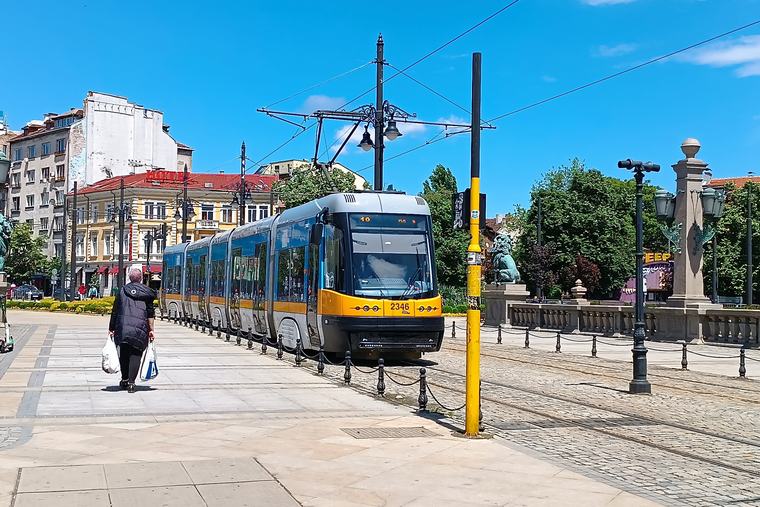
Sofia Airport to the city centre
Sofia Airport has two terminals, linked by a free shuttle that runs 24 hours a day, every 20 to 40 minutes. The airport's transport page lists three ways into town:
- Metro M4, from Terminal 2. The station stands next to the terminal. A single costs €0.80 and you can pay by contactless card. The airport puts the ride at about 20 minutes to the centre. For the Central Railway Station, change to line M2 at Serdika. There is no metro at Terminal 1: take the shuttle to Terminal 2 or use the bus.
- Bus 84, from both terminals, to Gen. Gurko Street in the centre, about every 12 minutes. It takes about 45 minutes on weekdays and 35 at weekends, for a €0.80 ticket. Between midnight and 04:00, night bus N4 serves both terminals hourly.
- Taxi. Yellow!, the airport operator's contract partner, has a desk in the terminals. The airport advises against taxis offered anywhere else. Sofia sets minimum and maximum taxi rates: in 2026 the daytime rate must be between €0.73 and €1.24 per km, BNR reported.
Sofia in winter
January is Sofia's coldest month. Normals for 1991–2020 give an average high of 3.5 °C, an average low of −3.9 °C, about ten days with precipitation and 88 hours of sunshine for the month (climate normals from the national weather institute, via Wikipedia).
Sofia's Christmas markets end before the holidays: in 2025 the German Christmas market in the City Garden ran from 14 November to 21 December. Come in January and you'll miss it. What January does suit is long museum days indoors while it's cold outside. The National History Museum and Boyana Church open every day; the National Gallery sites, the crypt and Kvadrat 500 run 10:00–18:00 from Tuesday to Sunday. On 1 January almost every museum is closed, including all National Gallery sites, the Archaeological Museum, the National History Museum, Natural History and Earth and Man.
If you'd rather someone else did the talking, Free Sofia Tour runs donation-based walks in English every day at 11:00 and 14:00 from the Palace of Justice (freesofiatour.com).
Practical notes
- Money. The euro has been the only legal tender since 1 February 2026. Leftover levs: the Bulgarian National Bank exchanges them free, with no end date. Since 1 July 2026 commercial banks may charge a fee for it.
- Alphabet. Bulgarian is written in Cyrillic. Learning a handful of letters makes metro maps and street names far easier.
- Head gestures. A nod can mean "no" and a shake "yes". When in doubt, use words.
- Closing days. Monday is the dead day for most museums. The Military History Museum also closes on Tuesdays, and the Synagogue on Saturdays. The National History Museum, Boyana Church, Natural History, Earth and Man, the Zoo and the Red Flat open daily.
- Cheap days. National Gallery sites cost €2 on Thursdays, and several other museums have a free day each month. See the table above.
- Altitude. The city sits at about 550 m, and Vitosha's summit at 2,290 m. Pack a warm layer for the mountain.